






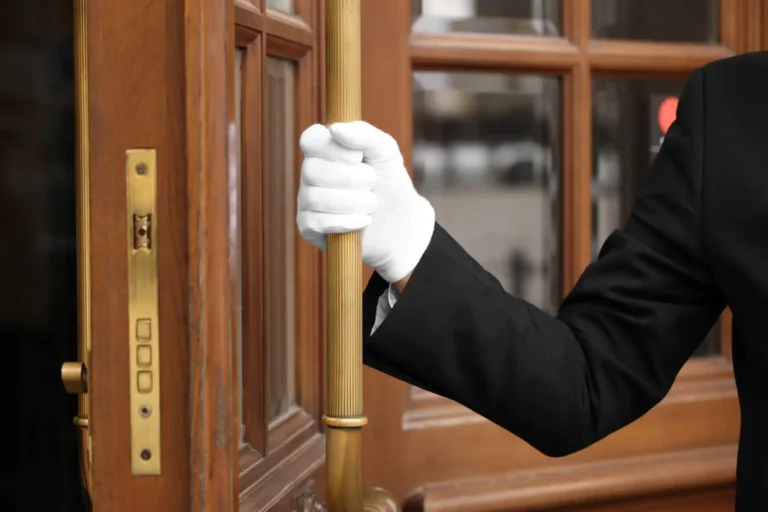



An official visit to Paris is judged on details that guests rarely see: a passport checked in good time, a car waiting at the right door, a seating plan that respects rank, an interpreter who knows the subject. Whether you are an embassy preparing a ministerial visit, a ministry organizing a bilateral meeting or a company receiving a board-level delegation, the logistics follow the same logic. This checklist sets out the main steps, from entry formalities to the final departure, so that nothing is left to improvisation.
1. Entry formalities: start with the passports
The first task is to list every member of the delegation with nationality, passport type and role. Visa requirements depend on several factors, and the official France-Visas site lists the type of passport among them, alongside nationality, residence status, length of stay and destination within France. Its online visa wizard indicates which visa is needed, the supporting documents and the fee.
Timing of visa applications
According to the France-Visas frequently asked questions, an application must be submitted at least two weeks before the planned visit and no more than six months before it. Processing times vary according to the applicant’s nationality and can be longer when additional checks are required, so for a delegation it is wise to begin as soon as the dates are fixed rather than working back from the minimum.
The EU Entry/Exit System
Delegates who are not EU nationals and come for a short stay should also expect the new biometric border procedure. The European Commission confirms that the Entry/Exit System went live on 12 October 2025 and was to be fully operational at all external border crossing points from 10 April 2026, with passport stamps replaced by electronic records. On a first crossing, travellers provide passport details, a facial image and fingerprints; later crossings require only a quick verification. Allow extra time for first crossings.
As for ETIAS, the future travel authorisation for visa-exempt visitors, the Commission’s ETIAS information page states that it is not yet in operation and that the start date will be announced several months before launch. Check that page before each visit rather than relying on dates circulating elsewhere.
2. Arrival: the first impression
The airport is where the tone of a visit is set. Decide early whether the delegation arrives on a scheduled flight or by private or state aircraft, because the two call for different preparation.
- Scheduled flights: a VIP airport assistance service can meet guests at the aircraft or the gate, accompany them through formalities and baggage reclaim, and bring them directly to their vehicles.
- Private or state aircraft: Groupe ADP presents Paris-Le Bourget, northeast of the capital, as Europe’s leading business aviation airport, with several fixed-base operators on site. The choice of handler, the slot and the reception arrangements on the apron should be confirmed well before the flight plan is filed.
- Welcome party: agree who greets the head of delegation, in what order the guests leave the aircraft and who carries the passports for formalities.
3. Accommodation and transport
Room blocks
Official visits often coincide with major events in Paris, when rooms near the ministries and embassies are in high demand. Secure a block of rooms as soon as the dates are known, with a clear allocation by rank: a suite for the head of delegation, rooms close by for advisers and security staff, and a working room or private salon for briefings. Ask the hotel about discreet entrances, a dedicated check-in, and how it handles flags, welcome gifts and room labels.
Motorcade and vehicle coordination
Transport is where schedules most often slip. A reliable plan usually includes:
- a vehicle list matched to the passenger list, with a lead car, the principal’s car and support vehicles;
- experienced chauffeurs briefed on the programme, the addresses and the order of departure;
- timed routes with alternatives, since traffic in central Paris can be unpredictable;
- a single coordinator in contact with the chauffeurs, the hotel and the host institution.
4. Protocol: rank, gifts and language
Protocol is less about rigid rules than about avoiding embarrassment. A few principles of good practice apply to almost every visit:
- Order of precedence: agree it in writing with the host side before the visit, and apply it consistently to car allocation, seating, speeches and photographs.
- Gifts: check what is customary for both sides and whether the recipient’s institution has rules on accepting gifts. Prefer meaningful, modest items and prepare cards and wrapping in advance.
- Interpreters: brief them on the subject matter and terminology, send documents ahead and decide between consecutive and simultaneous interpretation according to the format of each meeting.
- Dress, flags and name cards: confirm the dress code for each event and check the spelling of names and titles twice.
Our protocol services are designed to support these preparations alongside your own protocol officers.
5. Security
The security of an official delegation combines the measures taken by public authorities with private arrangements around the hotel, the vehicles and private events. In France, private security is regulated by the Conseil national des activités privées de sécurité (CNAPS). According to its official presentation of its missions, CNAPS issues, suspends and withdraws the authorisations and professional cards required to carry out private security activities, and also has disciplinary and advisory roles. Before engaging a provider, ask for its authorisation and the professional cards of the agents assigned to you. Our professional security services are arranged on that basis.
6. Timeline checklist
- As soon as dates are fixed: draw up the delegation list, check visa requirements, reserve the room block and confirm the arrival airport.
- Several weeks before: submit visa applications, agree the order of precedence, book interpreters, choose gifts and engage licensed security.
- Two weeks before: finalize the programme, vehicle plan and seating plans; brief chauffeurs and hotel staff.
- The week before: confirm airport arrangements, run the routes, print name cards and distribute the contact sheet.
- On the day: hold a morning briefing, keep the coordinator reachable at all times and adjust timings in real time.
- After departure: settle accounts, send thank-you letters and record lessons for the next visit.
If you are preparing a visit and would like a single team to coordinate it, discover our official delegation services or contact our concierge team to discuss your programme in confidence.
Frequently asked questions
How early should visa applications be submitted?
France-Visas states that applications must be lodged at least two weeks and no more than six months before the visit. For a delegation, start as early as the dates allow, since processing times vary by nationality.
Does the Entry/Exit System apply to members of a delegation?
The system concerns non-EU nationals on short stays. Use the official EU and France-Visas resources to confirm how it applies to each traveller’s passport and status.
Which airport suits a private or state aircraft?
Paris-Le Bourget is the capital’s dedicated business aviation airport. The handler, slot and reception should be confirmed with the operator well in advance.
Can Casaa Concierge coordinate the whole visit?
Yes. Our team can arrange airport assistance, accommodation, chauffeured vehicles, protocol support and security, working alongside your embassy, ministry or company teams.
How do I check that a private security provider is authorised?
Ask for the company’s authorisation and the agents’ professional cards issued by CNAPS. Its official website also offers an online service for consulting these titles.